






In a living room, choose 2700 K if you want warm light for the evening. Choose 3000 K if the living room is very bright, has white or cool-toned walls, or is also used for reading and working. When in doubt, go with 2700 K for ambient lamps. The 300 K difference may seem small on the packaging, but it changes the color of walls, wood, and faces.
This guide helps you decide based on your walls, materials, and the natural light in the room. If you want to compare the two shades point by point, go directly to the comparison table.
2700K or 3000K: which light temperature for your living room?
Both of these warm whites are suitable for a living room, and the right choice depends on your space. Look at these two lists and keep the one that most closely resembles your living room.
Choose 2700 K if
- You primarily want a warm and relaxing atmosphere, especially in the evening.
- Wood, rattan, paper, linen, or travertine dominate the decor.
- Your walls are beige, ochre, terracotta, or dark.
- The room receives little natural light.

Choose 3000 K if
- The living room has lots of windows and you often turn on the lights during the day.
- The walls are pure white, gray, blue, or sage green.
- The decor is contemporary and minimalist.
- You often read or work in the room.
Our default recommendation: 2700 K for ambient and accent light sources, such as pendant lights, lamps, and wall lights. The shade is most noticeable in the evening. If you are still unsure, a ceiling light or bulbs with adjustable color temperature will let you decide later. To create an overall atmosphere around this warm white, read our 7 rules for warm living room lighting.
Notre sélection
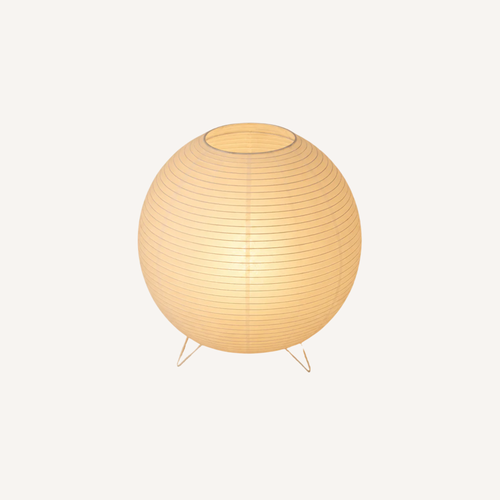
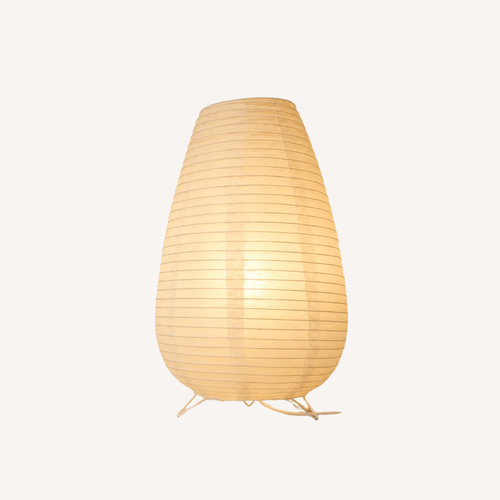
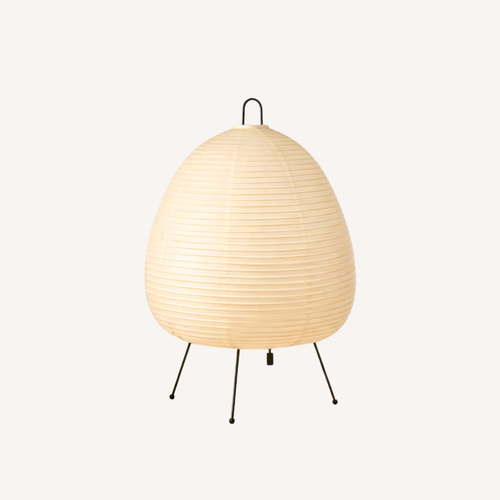
Our paper lighting for soft evening light

What does Kelvin mean, and what do these numbers change?
Color temperature is expressed in kelvins, denoted by K. It describes the shade of a white light. The principle is often surprising, because the lower the number, the warmer and more golden the light. The higher it is, the more it leans toward blue.
- 2700 K, very warm white. This is the golden shade of old incandescent bulbs. It is suitable for the living room, bedroom, and evening ambiance.
- 3000 K, warm white. A little brighter and crisper, it is the versatile choice. It is suitable for the dining room, kitchen ambiance, entryway, and bathroom.
- 4000 K, neutral white. It is used for a countertop, office, or laundry room. Avoid it for living room ambiance.
- 5000 to 6500 K, cool white. It is made for a garage or workshop. Never put it in a living room.
For a living room, the choice therefore comes down to two close values, 2700 K and 3000 K. Be aware that color temperature says nothing about the amount of light. A 3000 K bulb does not shine brighter than a 2700 K bulb. The amount of light is measured in lumens and calculated separately. To find it, read our guide how many lumens for a living room.
Rendering, ambiance, materials: 2700 K and 3000 K compared
To decide, look at your living room as it is. Note the color of the walls, the dominant materials, the amount of natural light, and the evening use. This table summarizes what each shade brings.
| Criterion | 2700 K, very warm white | 3000 K, warm white |
|---|---|---|
| Perceived shade | Golden, like an incandescent bulb | Cream, brighter and crisper |
| Ambiance | Intimate, especially pleasant in the evening | Welcoming, livelier, versatile |
| White walls | Take on a cream shade, sometimes yellow | Remain white, barely warmed |
| Gray, blue, sage green walls | May appear dull or greenish | More accurate colors |
| Wood, rattan, travertine, terracotta | Very warm | Natural, slightly less golden |
| Reading, occasional work | Comfortable but soft | More clarity on the page |
| With daylight | Marked contrast late in the afternoon | Softer transition |
| Styles | Japandi, bohemian, mineral, retro | Contemporary, light Scandinavian, minimalist |
Wall color, the first criterion
Warm light enhances warm tones and softens cool tones. Beige, ochre, terracotta walls, or a lime plaster render look very good at 2700 K. Pearl gray, slate blue, or sage green walls, on the contrary, risk appearing dull, and 3000 K better respects their shade.
Pure white walls yellow slightly at 2700 K. If you want to keep a crisp white, 3000 K is safer. Wood also reacts. At 2700 K it leans toward orange, at 3000 K it keeps its natural shade. A blue-green painting loses its brilliance at 2700 K and remains truer at 3000 K.
Daylight, the second criterion
In a very windowed living room, the lights are often turned on while it is still daylight. Natural light is significantly cooler, and a 2700 K source then appears very orange late in the afternoon. 3000 K makes a softer transition. Conversely, in a dark living room used mainly in the evening, 2700 K immediately creates an enveloping atmosphere.

Reading and working
2700 K remains comfortable for reading, but it is softer. 3000 K gives more clarity on the page. If you often read in the same place, a 3000 K reading lamp in that corner is well suited, as long as the rest of the room does not exceed a 300 K difference.

Notre sélection
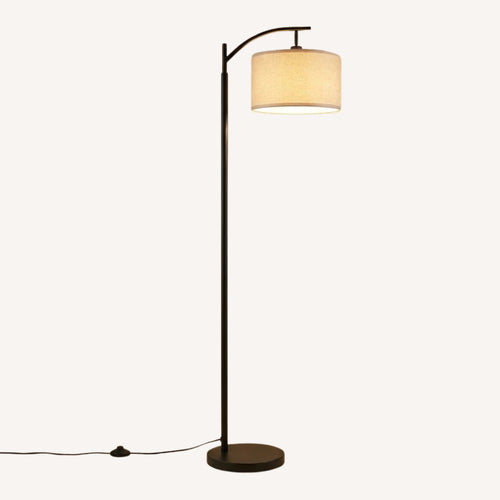
Our models delivered in 3000 K

Can you mix several temperatures in a room?
The most important rule is to keep a single temperature throughout the room, or two very close values. A 2700 K floor lamp next to a 4000 K ceiling light creates a patchwork effect. You see yellow zones and bluish zones, and faces change color depending on where you sit.
- Keep a maximum difference of about 300 K between two sources visible at the same time. The mix of 2700 K and 3000 K works, the mix of 2700 K and 4000 K does not work.
- In a living room open to the kitchen, keep 2700 K on the living room side and 3000 K for the kitchen ambiance. The difference remains within the limit and each zone keeps its function.
- Buy your bulbs in packs. Two "warm white" bulbs from different brands do not always have exactly the same shade. Check the Kelvin value, because this name can refer to 2700 K as well as 3000 K.
CRI, dimmers, and dim-to-warm: how to set the light quality?
Choosing the right shade is not enough. Two 2700 K bulbs can give a very different rendering. Three criteria make the quality of the light.
CRI, for accurate colors
The color rendering index, or CRI, measures a lamp's ability to show real colors. Count on 80 at minimum and aim for 90 or more in a living room. Fabrics, wood, paintings, and skin tones then keep their shade. A 2700 K LED with a low CRI gives a yellowish and dull light, and it is what gives warm white a bad reputation.
The dimmer, for one shade and several intensities
A dimmer allows you to lower the light without changing the lamp. It is recommended everywhere where you live in the evening. Just check that the bulb or integrated LED is marked "dimmable", meaning compatible with a dimmer. Some luminaires adjust their intensity themselves, like the Simplélis ceiling light, which also exists in warm, neutral, or cool white.
Dim-to-warm, so you no longer have to choose
“Dim-to-warm” LEDs warm up when you lower their intensity, like an incandescent bulb used to do. The light is crisper at full power and increasingly golden when you dim it. It is a good solution for a living room used during the day and evening. Some LEDs also offer several shades to choose from, like the Noctaro floor lamp and its 3 light colors.

To weigh the advantages of an integrated lamp or a bulb that you change whenever you want, read our comparison integrated LED or replaceable bulb.
Notre sélection
Our models to choose the shade of your light
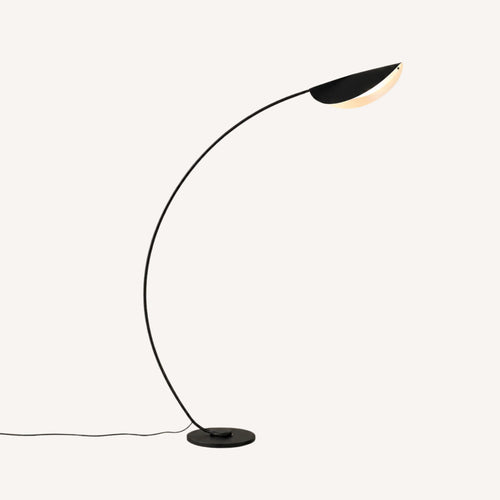
Noctaro
Black wrought iron · 3 light colors
£312.00
Voir le produit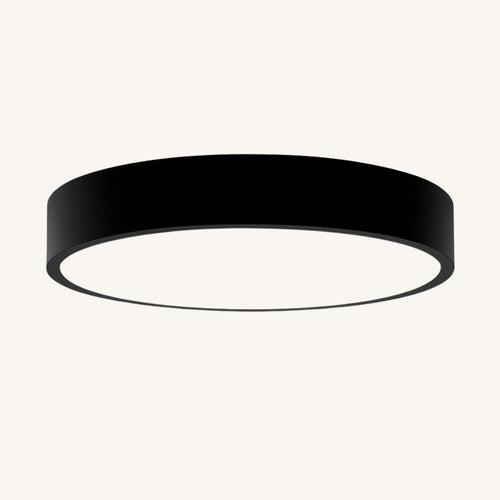
Simplélis
Ø 23 to 60 cm · adjustable intensity
À partir de £51.00
Voir le produit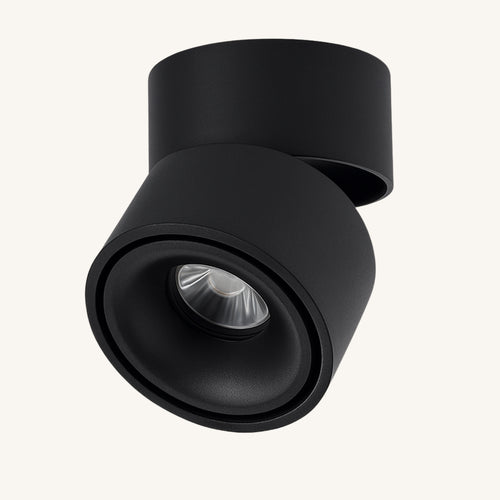
Nordélis
Adjustable spotlight · 3 shades to choose from
À partir de £43.00
Voir le produit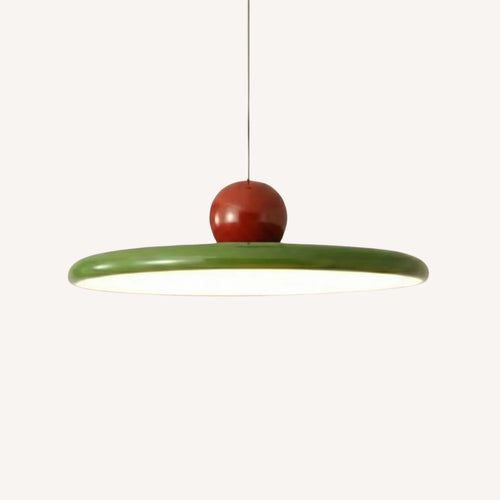
Olivora
Metal · 3 shades to choose from
À partir de £120.00
Voir le produitHow to read a light bulb's packaging?
Everything you need is on the box. Check these five pieces of information before buying.
- Lumens indicate the amount of light. Some incandescent equivalents: 470 lumens for about 40 W, 806 lumens for about 60 W, 1,055 lumens for about 75 W.
- Kelvins give the shade. Take 2700 K or 3000 K for a living room, never 4000 K or more.
- CRI, sometimes noted Ra, must be 90 or more. If it is not indicated, be careful.
- The 3-digit code summarizes the two. A 927 bulb has a CRI of 90 or more and a shade of 2700 K. A 930 bulb has a CRI of 90 or more and a shade of 3000 K. An 827 bulb has a CRI of 80 and a shade of 2700 K.
- The "dimmable" mention is essential if you connect the bulb to a dimmer.
Two living rooms, two lighting choices
An 18 m² living room with linen-colored walls, used mainly in the evening
The room faces north, with oak parquet, natural materials, and a bouclé sofa. You need a golden and enveloping light from dusk, so 2700 K everywhere.
Our choice: the Floréa paper chandelier, with a 927 bulb in place of the provided bulb, the Lumaro floor lamp in the corner of the sofa, and the Sérune lamp set to its warmest shade.

A 25 m² living room with pure white walls, with a large bay window and a desk area
The room is very windowed, with a contemporary black and white decor, a reading corner, and remote work. You need a warm light that does not yellow the walls, so 3000 K everywhere. The chosen ceiling light covers 10 to 15 m² according to its sheet, and therefore lights the main area. The two other luminaires complete the rest of the room.
Our choice: the Simplélis ceiling light in warm white, with adjustable intensity, the Liséa reading lamp at 3000 K for the armchair, and the Nordélis spotlight in warm white toward a painting. The sheets of the Simplélis and the Nordélis do not specify the Kelvin value of their warm white, so test the rendering in the evening, in the room.
Mistakes that make a living room feel cold
- Choosing cool white to have more light. The shade has nothing to do with the quantity. To light more, increase the lumens and keep the same Kelvins.
- Mixing 2700 K and 4000 K. Beyond a 300 K difference, the room looks patched together.
- Neglecting the CRI. Below 80, even a 2700 K bulb appears dull and yellowish.
- Forgetting the "dimmable" mention. On a dimmer, a non-compatible LED reacts badly.
- Judging the shade in broad daylight. Test your bulbs in the evening, in the room, with your own walls.
To know which luminaires to associate with this warm white, read our guide which luminaire for a living room.
Your questions
2700K or 3000K: which light should you choose for a living room?
Choose 2700 K for a soft atmosphere, natural materials, and a living room that is mainly used in the evening. Choose 3000 K for a very bright living room with white or cool-toned walls, or one that is also used for reading and working. If you are unsure, 2700 K remains the standard for ambient lighting.
What is the difference between 2700 K and 3000 K?
Both are warm whites. 2700 K is more golden, close to an incandescent bulb. 3000 K is brighter and clearer. The difference is most noticeable on white walls, which turn slightly yellow at 2700 K.
Can you mix 2700 K and 3000 K in the same room?
Yes, because the difference is still 300 K, which is the limit not to exceed. However, avoid combining 2700 K and 4000 K. The golden areas and the bluish areas are visible side by side, and the room looks patchy.
Is 4000 K suitable for a living room?
No, not for the atmosphere of a living room. 4000 K is a neutral white, suitable for a worktop, office, or laundry room. In a living room, it creates a cold atmosphere that is unflattering for faces and materials.
What is a dim-to-warm LED?
It is an LED that warms up when you lower its intensity, like an incandescent bulb. It gives a clearer light at full power and a golden glow when dimmed. It is well suited to a living room used both day and night.
What does the code 927 or 930 on a bulb mean?
The first number indicates the CRI, i.e., color fidelity (9 means 90 or more). The next two give the temperature (27 for 2700 K, 30 for 3000 K). A 927 bulb is therefore a very warm white with very good color rendering, an excellent choice for a living room.
The right white, in the right light fixture
Do you know which shade suits you? Compare pendant lights, floor lamps, and table lamps on the product pages.
Free delivery · 30-day returns · Secure payment
