






For a hallway, the most effective lighting is generally a series of low-profile wall lights, meaning they protrude little from the wall. Install them between 1.70 and 1.90 m from the floor, every 2 to 3 m, with light that, if possible, shines up and down. If the walls are cluttered or the ceiling is low, choose extra-flat ceiling lights or spotlights.
This guide helps you choose based on the width, length, and height of your hallway. To find out how many lights to plan for, go directly to the calculation method.
What lighting for a hallway: wall lights, ceiling lights or spotlights?
You walk through the hallway dozens of times a day, often at night. It is often without windows, almost always narrow and sometimes very long. So start by taking a few measurements.
Narrow, long or dark: what to measure
- The width. Under 1 m, a wall light should not protrude more than 10 to 12 cm from the wall. Beyond that, you risk bumping your shoulder into it.
- The length. This determines the number of light points, at a rate of one source every 2 to 3 m.
- The ceiling height. Under 2.40 m, forget the pendant light and choose an extra-flat ceiling light, 10 cm thick at most. For a pendant light in a passageway, keep at least 2 m below the light, and 2.10 m if possible.
- Daylight. A windowless hallway is lit at all hours. Then choose LED sources and automatic lighting.
The possible solutions
The right choice depends mainly on what occupies your walls and the available height.
| Solution | When to choose it | Strengths and limitations |
|---|---|---|
| Series of wall lights | The walls are free between the doors | Light at eye level and walls highlighted. Protrusion of 10 to 12 cm at most under 1 m wide, wall-mounted power supply |
| Series of ceiling lights | The walls are occupied by doors, closets or frames | Even light, installed on existing points. Tunnel effect if they are alone, extra-flat under 2.40 m |
| Surface-mounted or bar spotlights | Hallway with frames, or only one light point available | Beams adjustable towards the walls and paintings. They dazzle if they aim at the passageway |
| Single ceiling light | Short hallway, less than 3 m | Simple and without work. Beyond that, the ends remain dark |
You can also combine two solutions, for example wall lights for ambiance and a few spotlights for a painting or the back wall. If your hallway opens onto the front door, also read our guide what lighting for an entrance.
Why wall lights are suitable for most hallways?
The wall light frees up the ceiling, illuminates the walls and places the light at eye level, where it adds volume. We recommend it in the majority of hallways, under three conditions.
- The right height. Install it between 1.70 and 1.90 m from the floor, slightly above eye level. The source does not dazzle and the light spreads over a large area of the wall.
- The right protrusion. Limit it to 10 or 12 cm in a hallway less than 1 m wide. Check the depth on the product sheet. The Auréclipse wall light, for example, states 9.5 cm.
- The right diffusion. An up and down model, like the Biséil wall light or the Siléil wall light, projects two beams that stretch the wall and visually raise the ceiling. An indirect halo, like that of the Eclipséil wall light, available today in white and Ø 20 cm, softens the light in narrow passageways.

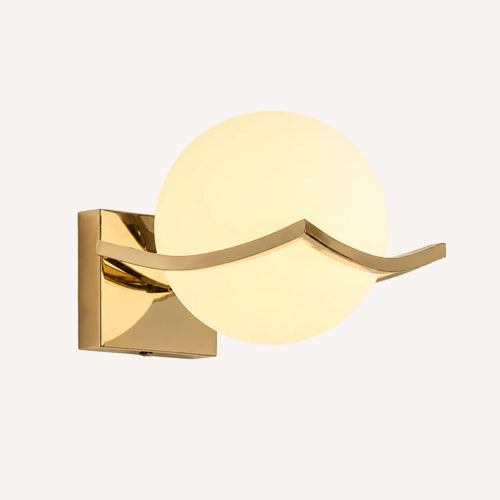
Avoid bare bulbs and protruding globes in a narrow hallway. You risk brushing against them, and their source dazzles at eye level. If you like the industrial style, keep a wall light with an exposed bulb like the Noctéil for a wide hallway or for the back wall.
Notre sélection
Our wall lights for a hallway


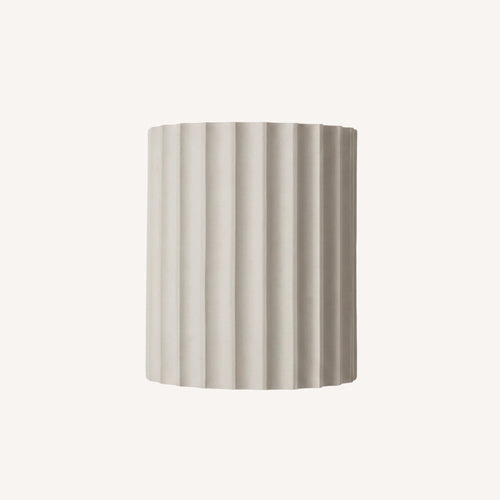

How many lights in a hallway, and at what spacing?
Remember one source every 2 to 3 m. Closer together, the wall lights form a series of points that are too visible. Further apart, they leave areas of shadow between two halos. Follow this method.
- Measure the length of the hallway, from one end to the other.
- Divide by 2 to 3 m. You get the number of sources. Count 2 or 3 for 6 m, 3 or 4 for 8 m, and 4 or 5 for 10 m.
- Place the first and last source at half the spacing. With a spacing of 2.5 m, they are 1.25 m from the end wall. The others are placed at equal intervals.
- Adjust around doors. Slightly offset a wall light rather than hiding it behind a door leaf. Visual alignment matters more than a centimeter.
- Check the amount of light. Lumens measure the light emitted. Count 100 to 150 lumens per m². A hallway of 6 × 1 m therefore requires 600 to 900 lumens in total. Three wall lights of 200 to 300 lumens each are sufficient, knowing that a bulb equivalent to 25 W gives about 250 lumens.
Ceiling lights and spotlights in series: when to prefer them?
When doors, closets or a bookcase occupy the walls, the light comes from the ceiling. Keep the same rhythm, with one point every 2 to 3 m. A large central ceiling light would leave the ends in shadow.
Extra-flat ceiling lights
Under 2.40 m, take 10 cm thick at most. The Orbélis ceiling light, in frosted glass, is 5 cm thick and available from Ø 23 cm. The Simplélis ceiling light also starts at 23 cm. The Minélis ceiling light, very thin, exists in 8 powers of 3 to 20 W, but its light is in neutral white. Check that it matches the neighboring rooms. You will find other solutions in our guide what lighting for a low ceiling.
Small stone ceiling lights
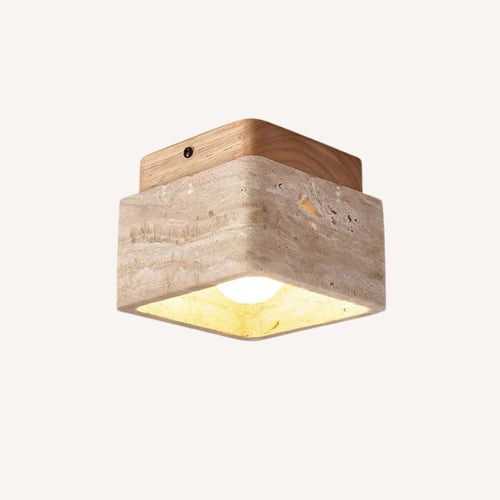
Installed in series, the travertine models give rhythm to the hallway. The Rivélis ceiling light measures Ø 12 cm. The Travébloc ceiling light is 12 cm on the side and works with an E27 bulb, not supplied.

Notre sélection
Our ceiling lights for a hallway
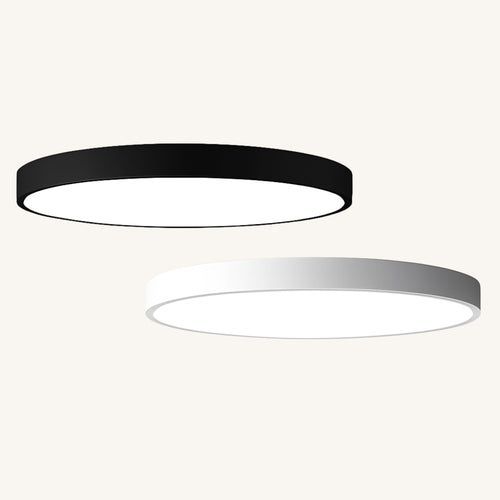
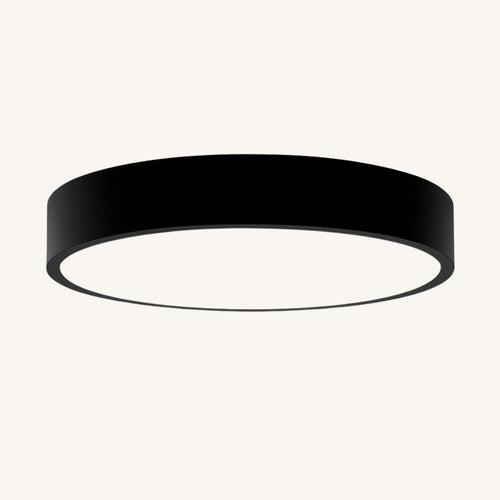
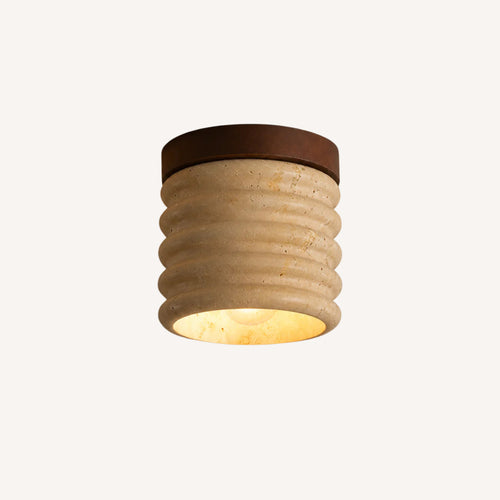
In terms of size, a hallway of less than 10 m² requires compact ceiling lights, 25 to 35 cm at most, and often less in a narrow passageway. Several small models are better than one large. For the complete method, read our guide how to choose the size of your ceiling light.
Spotlights
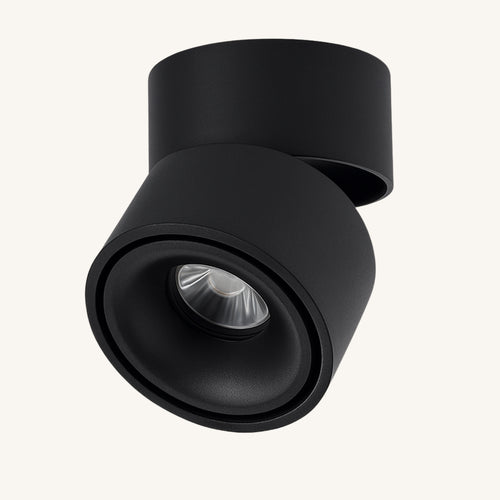
The Discélis spotlight of Ø 8.5 cm screws on surface, without a cutout in the ceiling, and discreetly marks the passageway. The Spotélis ceiling light, with 1, 2 or 3 heads, also mounts without a cutout.

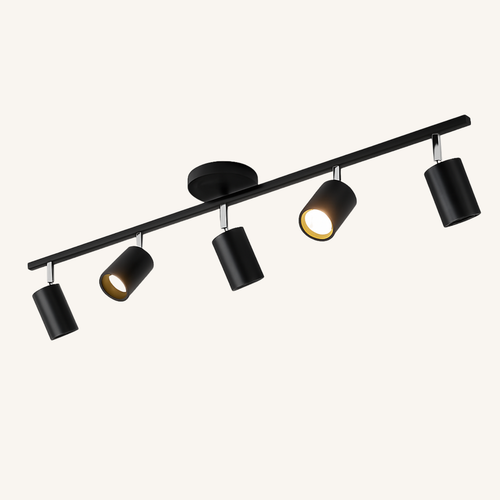
If you only have one light point on the ceiling, in the middle of a long hallway, there is no need to pull new cables. Connect a Rampélis bar of adjustable spotlights. Its 3 to 6 heads distribute the light towards the two ends and towards the walls. Its light is neutral, to be compared with that of the neighboring rooms.
Notre sélection
Our spotlights for a hallway

How to transform the hallway into a gallery?
Three simple ideas highlight the hallway.
- Light up the back wall. A wall light or spotlight on the end wall draws the eye and visually shortens a hallway that is too long.
- Highlight the frames. Direct a Nordélis adjustable spotlight towards a painting, and never towards the passageway.
- Try grazing light. An up and down wall light on a textured wall, such as lime plaster, polished concrete or paneling, brings out the material and gives depth.

Keep the same shade of white as in the neighboring rooms, 2700 K or 3000 K, with a maximum difference of 300 K. Kelvin (K) measures the color of the light, and the lower the number, the warmer it is. The hallway thus extends the rest of the house.
Sensor, two-way switch, night light: how to gain comfort?
- A motion sensor. The light turns on by itself and turns off after you pass. It is the most practical equipment for a windowless hallway.
- Switches at each end. We are talking about a two-way switch. It is the right solution if you prefer manual control.
- A night light. A low marking or a low-intensity wall light allows you to move around without turning everything on.
- A switch on the light fixture. The Scandéil wall light exists in a version with an integrated switch. Check on the product sheet which version includes it. The Escaléil wall light has a touch switch.
In a hallway, the integrated LED allows for thinner wall lights, which helps under 1 m wide. The replaceable bulb lets you choose the shade and power. At equal light, both consume the same. Read our guide Integrated LED or replaceable bulb.
And the stairs?
The stairs often extend the hallway and follow two rules, one source per landing and a marking of the steps. No light should dazzle in the axis of the ascent or descent. Therefore, prefer wall lights on the side, up and down, to ceiling spotlights aimed at the steps.

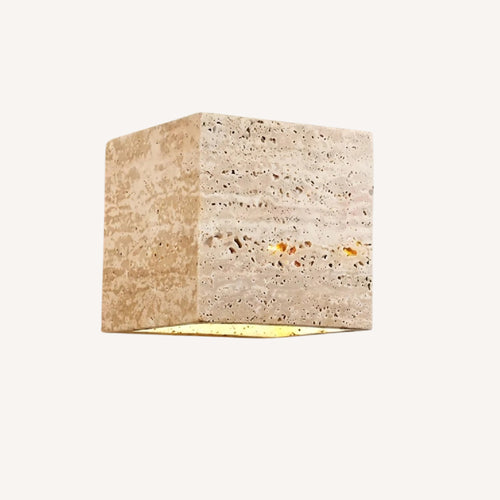
The Luminosa wall light with a travertine effect or the Élyane ball are also suitable for ascents. For a two-level stairwell, read our guide lighting for a large ceiling height.
Notre sélection
Our wall lights for a staircase

What lighting for a hallway? 2 illustrated examples
An apartment hallway of 6 × 0.95 m, ceiling at 2.50 m, without windows
It has four doors and no natural light. The central ceiling light left the two ends in the shadows. You need 3 sources spaced 2 m apart, the first 1 m from each end, and 570 to 860 lumens in total.
Our choice: three Auréclipse wall lights of 9.5 cm depth, 1.80 m from the floor, with a motion sensor at each end. The central light point receives a Nordélis spotlight aimed towards the back wall.
A house hallway of 9 × 1.20 m, ceiling at 2.40 m, occupied walls
Closets occupy one length and doors occupy the other. There is therefore no room for wall lights. You need 4 sources spaced 2.25 m apart, the first about 1.10 m from the ends, and 1,080 to 1,620 lumens in total.
Our choice: four Orbélis ceiling lights, Ø 23 cm and 5 cm thick, a Biséil wall light illuminating up and down on the back wall, and a two-way switch at both ends.
The 6 mistakes to avoid in a hallway
- A single ceiling light in the center. The ends remain dark and the tunnel effect appears as soon as the hallway exceeds 3 m.
- Wall lights that protrude too much. Beyond 10 to 12 cm in a hallway narrower than 1 m, you risk bumping into them.
- Wall lights that are too low. Below 1.70 m, the light source shines directly into your eyes.
- Spotlights aimed at the walkway. Aim them at the walls and pictures, never at people walking.
- Too much light. Lux measures the light received on a surface. Beyond 100 lux, the hallway looks like a waiting room. 50 to 100 lux is enough.
- A different color temperature than the adjacent rooms. With cool white in the hallway and warm white in the living room, the transition between the two is noticeable.
Your questions
What light fixture for a hallway?
Most often, a series of low-profile wall lights, placed between 1.70 and 1.90 m above the floor every 2 to 3 m, preferably with light directed up and down. If the walls are cluttered or the ceiling is low, choose extra-flat ceiling lights in a series or spotlights.
What light fixture for a narrow hallway?
For hallways narrower than 1 m, choose wall lights that do not protrude more than 10 to 12 cm from the wall, or extra-flat ceiling lights. Light directed up and down visually widens the passage and avoids the tunnel effect.
At what height should a wall light be installed in a hallway?
Install it between 1.70 and 1.90 m above the floor, slightly above eye level. The light source does not dazzle you as you walk and the light spreads over a large area of the wall.
How many light fixtures for a 6 m hallway?
Plan for one light source every 2 to 3 m, or 2 to 3 fixtures. With 3 wall lights spaced 2 m apart, the first and last are placed 1 m from the ends. For a 6 m² hallway, 600 to 900 lumens in total is enough.
How to light a dark hallway without windows?
Choose wall lights that illuminate up and down and highlight the walls, keep the walls light-colored, and illuminate the back wall to add depth. Aim for 50 to 100 lux. Add a motion sensor, since the light will be used at all hours.
Is a motion sensor needed in a hallway?
It is the most practical equipment. The light turns on when you enter and turns off after you pass. Place it so that it covers both ends, or provide a sensor on each side in a long hallway.
Light up your hallway
You have the length, width, and number of light sources. Now compare the depths and materials on the product pages.
View wall lights for your hallway
Free delivery · 30-day returns · Secure payment
