






For a dining room, start with a pendant light or chandelier above the table, about 75 cm above the table. Then add soft ambient lighting, such as wall lights or a floor lamp. Finish with one or two small accent lights, such as a lamp on the sideboard. Choose a warm white of 3000 K and install a dimmer on the pendant light.
This guide helps you choose each light fixture, place it, and coordinate it with the rest of your interior. To get straight to the essentials for your room, see the configuration table.
What light fixture for a dining room?
In many dining rooms, everything depends on a single light source above the table. The table is lit, but the walls remain dark and the sideboard disappears into the shadows. In the evening, the room appears smaller. To avoid this, combine three types of light, each with a specific role.
- The table light. This is the main one. A pendant light or chandelier illuminates the dishes and faces, and marks the place where people gather.
- The ambient light. Wall lights, a floor lamp, or a flat ceiling light in a large room provide soft light. The table is no longer a lit spot in the middle of the darkness.
- The accent light. A lamp on the sideboard, a spotlight on a painting, or a cordless lamp on the table are small sources that add depth to the room.
Separate the controls. Put the pendant light on a dimmer, the wall lights on a second switch, and the lamps on a socket. This way, you can set a different atmosphere for each occasion without multiplying the work.
What light fixture above the table?
The table is in the center of the room, and its shape quickly guides you toward one of these four families.
- A single pendant light. It is suitable for a round, square, or rectangular table up to 160 cm. On a rectangular table, an oval model works very well.
- Two or three identical pendant lights. This is the most flexible solution from 140 cm. From 180 cm, a single pendant light becomes too short.
- A long light fixture. It follows a large table with a single light source.
- A chandelier. It is suitable for a reception room or a high ceiling.

You will find the detailed comparison of these options in our guide what light fixture above a dining table. Keep these three points in mind.
- The height. Leave 60 to 80 cm between the table and the bottom of the pendant light, with 75 cm as a guide. For a table 75 cm high, the bottom of the light fixture is therefore between 1.35 and 1.55 m from the floor. To adjust according to your model, read our guide on the height of a pendant light above a table.
- The diameter. For a single pendant light, aim for about half the width of the table, or its diameter if it is round.
- The amount of light on the table. It is measured in lux, which is the light that reaches a surface. Aim for 200 to 300 lux on the table, and 100 to 200 lux in the rest of the room.
Notre sélection
Our models for lighting the table

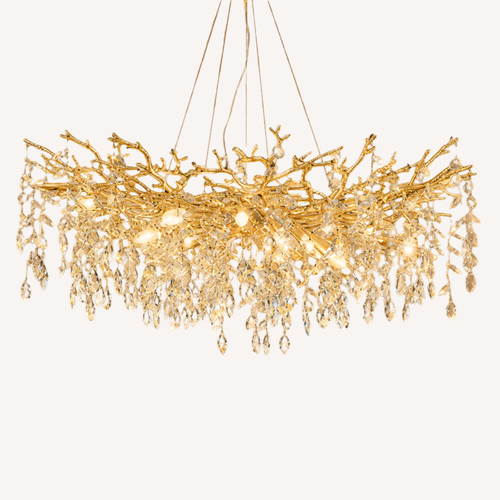
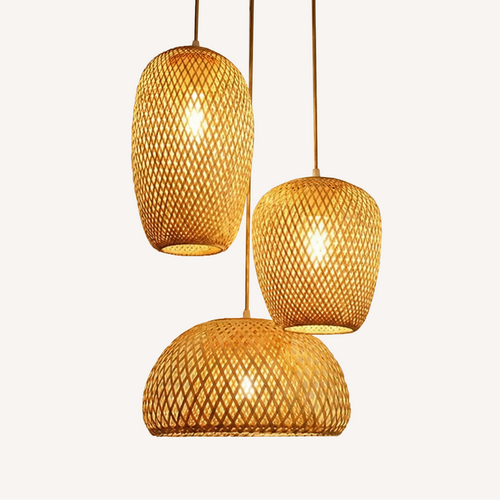
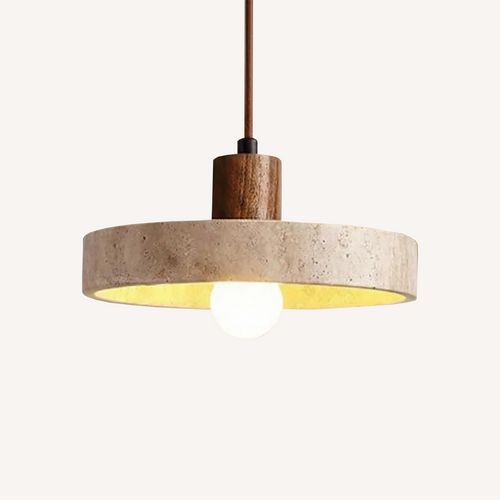
See all pendant lights and chandeliers
What ambient light and what accents around the table?
Once the table is lit, add 100 to 200 lux of soft light in the rest of the room. You can then move around and serve without putting the pendant light at full power. Here are the light fixtures that provide this ambient light.
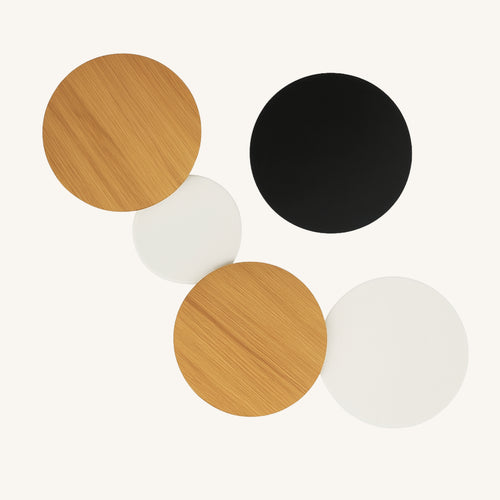
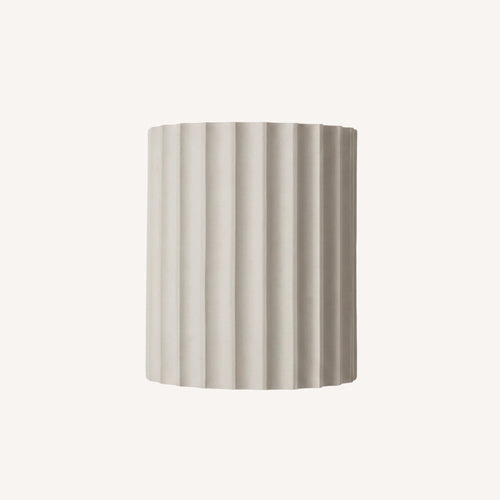
- Wall lights. Placed at 1.60 or 1.80 m from the floor, they cast a halo on the walls and enlarge the room. Install a pair on each side of the sideboard. The Eclipséil wall light, available in white and Ø 20 cm, gives a halo, and the Siléil wall light shines up and down.
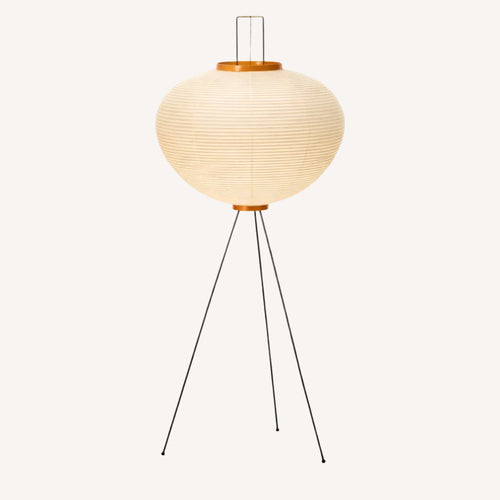
- The floor lamp. It occupies a free corner without any work. The Lumaro floor lamp, with its rice paper ball, diffuses a soft and uniform light.
- The ceiling light. It is only useful in a room larger than 20 m² or if the table is off-center. Put it on a separate circuit. The Travélis ceiling light, in wood and natural stone, goes well with a mineral pendant light.

Notre sélection
Our wall lights and floor lamps for ambiance

Accents
Then add the small sources that add depth to the room.
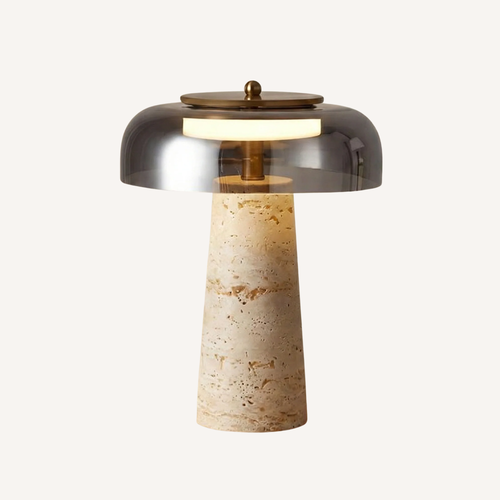
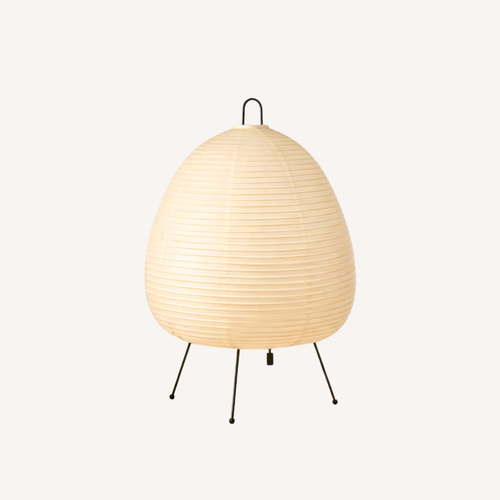
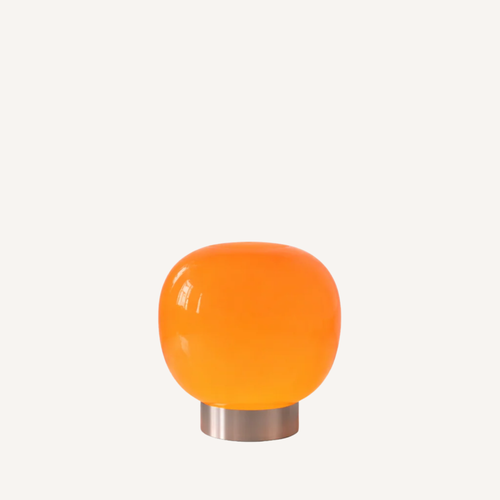
- On the sideboard. A table lamp gives a low and pleasant light. Look at the Sérune lamp in pleated paper or the Linuna lamp in wood, with its pleated shade.
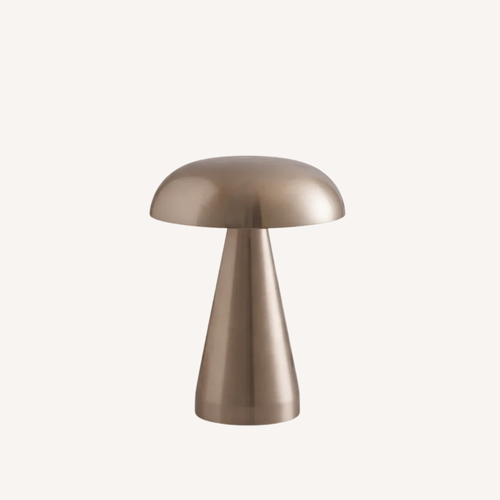
- On the table. A cordless lamp replaces the candle. The Solar lamp recharges via USB and offers 9 levels of brightness. The Fuméa lamp, in brushed metal, runs on batteries.
- On a painting or a shelf. An adjustable spotlight like the Nordélis spotlight precisely targets a wall. The Rampélis bar connects to an existing light source.

Notre sélection
Our table lamps for the sideboard and the table
Where to place each light fixture?
Let's take a 14 m² room, 4 × 3.5 m, with a 160 × 90 cm table for six people. Here is the layout to follow.
- Center the pendant light over the table, not the room. Move it if necessary, for example with an extension hook.
- Frame the sideboard. Install a pair of wall lights at 1.60 or 1.80 m from the floor. They add volume to the room.
- Balance the opposite side. Place a floor lamp or a spotlight directed at a painting.
- Keep the passage free. Outside the table, nothing should hang below 2.00 m, and ideally 2.10 m, where people walk standing up.
What dining room light fixture according to your room?
Locate your situation in this table. It gives you the light fixture for the table, then the sources to add around.
| Your dining room | Above the table | Around the table |
|---|---|---|
|
Dining corner round table Ø 90 cm |
A pendant light Ø 35 to 45 cm | An up and down wall light or the light from the neighboring living room, and a cordless lamp on the table |
|
Medium room table 140 × 90 cm |
A pendant light Ø 45 to 50 cm, or two Ø 25 to 35 cm | A pair of wall lights and a lamp on the sideboard |
|
Family room table 160 to 180 cm |
Two or three pendant lights, or a long light fixture 80 to 120 cm | Wall lights, a floor lamp, a lamp on the sideboard and a spotlight on a painting |
|
Large room table 200 cm and more |
Three pendant lights Ø 30 to 40 cm, or a long light fixture 120 to 160 cm | A flat ceiling light on a separate circuit, wall lights, several lamps and spotlights |
|
Low ceiling less than 2.40 m |
A pendant light, because you do not walk standing up above the table, or a very thin chandelier | Wall lights with light upwards and low lamps |
|
Great height more than 3 m |
A large pendant light or chandelier, with a long cable 1.5 to 2 m | Wall lights at mid-height, a floor lamp and lamps |
Under a low ceiling, the Orvella chandelier measures only 7.6 cm thick. In a large volume, the Brisora pendant light, with its cable adjustable up to 200 cm, keeps the right distance with the table.
If your dining room is open to the living room or kitchen
In an open living room, each area needs its light, without the whole thing appearing mismatched. The pendant light of the table marks the boundary between uses.
- A single light temperature. Keep 3000 K everywhere, or 2700 K everywhere, with at most 300 K difference between two sources.
- Two or three materials at most. Repeat them from one area to another, for example travertine and light wood, or brass and opaline glass.
- Similar shapes. Take for example small domes on the island and a wider dome on the table.
- One control per area. This way you can turn off the kitchen during dinner.
On the kitchen side, the pendant lights of the island are set a little higher, at 75 or 90 cm above the worktop. On the living room side, read our guide what light fixture for a living room to extend the same light.
What style of light fixture for your dining room?
First choose the light fixture of the table. Then repeat its materials on the wall lights and lamps.
Classic, with crystal
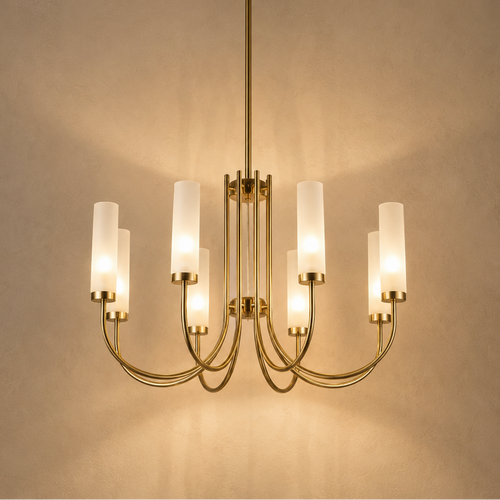
Crystal, golden metal and frosted glass are suitable for a reception room. Take the Sylvara chandelier on a long table, the Lucerna candle chandelier or the Velaria chandelier on a round table. Also look at our collection of crystal chandeliers.
Scandinavian and retro
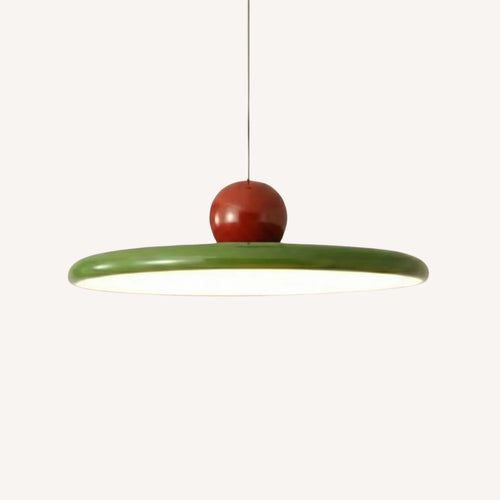
Lacquered metal and colors give simple shapes and directed light. Look at the Solora pendant light with stacked discs, the Olivora pendant light in flat disc, or the Luméa pendant light in series. Our Scandinavian collection offers other models.
Mineral and warm
Travertine, stone and wood give simple volumes. Look at the Travéhalo pendant light in series, or the Travéaube pendant light in dome. See also our travertine collection.

Bohemian and natural
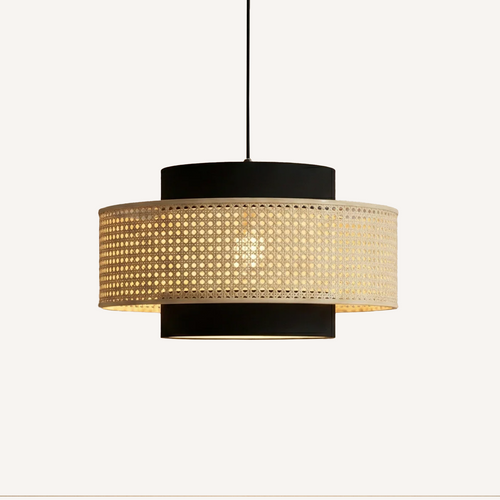
Rattan, bamboo, linen and paper filter the light and draw soft shadows. Look at the triple Doréa pendant light in woven bamboo. See also our collections in rattan and in paper.

Notre sélection
Our models according to your style

How to set the light: dimmer, Kelvin and CRI?
A dining room serves several purposes during the day. Put the pendant light at full power to work. Lower it and turn on the sideboard lamp for dinner. Put it at minimum, with the wall lights and cordless lamps, for the aperitif. It is the dimmer that allows these settings.
- The color of the light. It is measured in Kelvin (K). 3000 K is the standard warm white, with appetizing dishes and light clear enough for reading. Go to 2700 K for more intimacy, especially if the room opens onto a living room already at 2700 K. Avoid 4000 K, which is suitable for a worktop.
- Color rendering. The color rendering index (CRI) indicates whether colors remain true. Aim for 90 or higher. Below that, dishes, wine, and faces look dull. The minimum is 80.
- The dimmer. Plan for at least one on the pendant light, with a compatible bulb or LED, marked "dimmable". The Orvella and Velaria chandeliers can even be adjusted by remote control.
For the amount of light, the lumen measures what the source emits. Allow 100 to 200 lumens per m² for the entire room, and more above the table. The detailed calculation, with watt equivalents, can be found in our guide what lighting power for a dining room.
Three concrete examples
A dining area with a 90 cm round table
The table seats 4 people, under a 2.50 m ceiling, in a Scandinavian style. The dining area extends the living room and only has a ceiling light. The dining area needs to be defined.
Our choice: the Olivora pendant light in Ø 40 cm, about 75 cm from the table. Add the Siléil wall light on the adjacent wall and the Fuméa cordless lamp on the table.

A 15 m² family dining room
The 160 × 90 cm table seats 6 people, under a 2.50 m ceiling, in a mineral style. The room is closed, with a low sideboard and a large painting. It is used for meals, homework, and dinners with friends. So, clear and adjustable lighting is needed.
Our choice: three Travéhalo pendant lights of Ø 21 cm, spread over about 1 m. Add two white Eclipséil wall lights around the sideboard, the Travénoir lamp on the sideboard and the Nordélis spotlight towards the painting.
A reception living room with a 200 × 100 cm table
The table seats 8 to 10 people, under a 2.70 m ceiling, in a classic style. The room opens onto the living room. The lighting must remain consistent with the sofa area.
Our choice: the Sylvara chandelier, 140 cm long, whose height is adjustable. Add two Fuméil wall lights above the sideboard, and the Auréa floor lamp next to the living room, to pick up the gold and glass.
Errors to avoid
- Leaving everything to the pendant light. Alone, it leaves the room in the shadows. Add at least one ambient source and one accent source.
- Hanging it too high. Beyond 80 cm from the table, the light disperses and the luminaire appears unrelated to the table.
- Centering it on the room rather than the table. The original light point is rarely in the right place. Offset the luminaire.
- Choosing a cold light. A 4000 K makes dishes look grayish and the atmosphere cold.
- Forgetting the dimmer. Without it, you cannot lower the light in the evening, and it can dazzle your guests.
Your questions
Which lighting to choose for a dining room?
Start with the table. Take a single pendant light up to 160 cm, several pendant lights or a long luminaire beyond that, and a chandelier for a reception room. Add an ambient source, such as a wall light or a floor lamp, and an accent source, such as a lamp on the sideboard or a spotlight.
At what height should a dining room light be installed?
Allow 60 to 80 cm between the table and the bottom of the pendant light, with a benchmark around 75 cm. For a 75 cm high table, this gives 1.35 to 1.55 m from the floor. Raise it to 80 cm for a large opaque model, and lower it to 65 or 70 cm for a small model that lets light through.
Pendant light or chandelier above the dining table?
The pendant light adapts to all styles, alone or in a series. The chandelier is more decorative and is well suited to a reception room or a high ceiling. Under a low ceiling, choose it very thin.
What color temperature for a dining room?
A warm white of 3000 K is the best benchmark. It makes dishes look appetizing and remains comfortable for reading. 2700 K gives a more intimate atmosphere. Keep the same temperature for all sources in the room and aim for a CRI of at least 90.
Is a ceiling light needed in a dining room?
Not necessarily. Under 20 m², the table pendant light, a pair of wall lights, and a lamp on the sideboard are enough. In a large room, or if the table is off-center, a flat ceiling light on a separate circuit provides general lighting.
How to light a table without a light point above?
An offset hook or a long plate brings a pendant light from an offset light point. If there is no point on the ceiling, take wall lights with a cable and socket, and place a cordless lamp on the table.
Compose the lighting of your dining room
Start with the table luminaire, then add the wall lights and lamps. Compare the sizes and materials on the product sheets.
View pendant lights and chandeliers
Free delivery · 30-day returns · Secure payment
