






When choosing between a walnut coffee table and an oak coffee table, start with the floor, then the sofa. Aim for a difference of two or three shades with each. On light parquet with a beige or cream sofa, choose a walnut shade. With a dark grey, green, or brown sofa, or in a small, poorly lit room, choose a light oak shade. Limit yourself to three wood shades in the room.
This guide helps you match the table with the floor, sofa, light, and other furniture. To get started quickly, find your situation in the shade chart. Our models are available in walnut-effect or oak-effect finishes, which should not be confused with solid walnut or oak.
Walnut or oak coffee table: which should you choose?
Identify your sofa and your floor. The line shows you the shade to aim for in our collection of coffee tables.
| Your sofa | Your floor | Shade to aim for |
|---|---|---|
| Beige or cream | Light parquet | Walnut or brown, as the contrast highlights the furniture |
| Light grey | Light or medium parquet | Walnut to warm it up, or oak if the room is small |
| Dark grey or black | Light parquet | Light oak, to avoid a dark mass in the centre |
| Green | Light or medium parquet | Oak or natural wood, as the colour remains on the sofa |
| Brown | Light parquet | Light, as two similar browns blend together |
| All light fabrics | Dark parquet or dark tiles | Light oak or natural, as walnut gets lost on a dark floor |
| You are still undecided | All floors | A model available in both shades, so you can compare the photos at home |
The rule of two or three shades extends our guide which coffee table with my sofa, which details the size, shape, and distance. Here, we are only talking about the shade.
Walnut effect, oak effect: what you are buying
In this article, walnut and oak refer to shades. None of our tables are presented as solid walnut or solid oak. Here is what the product pages say.
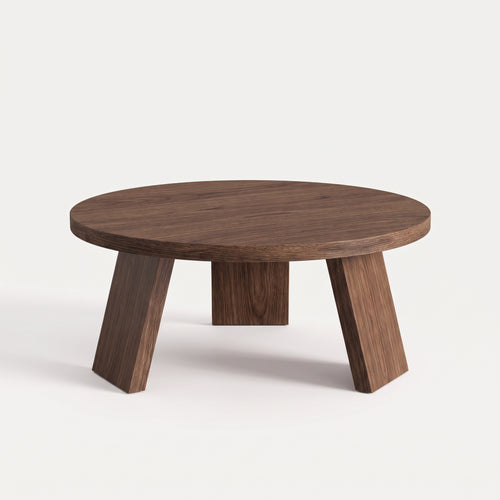
- The round walnut-effect table. Walnut-effect finish with pronounced graining, particleboard top.
- The oval lift-top table. Light wood or walnut colour, in MDF, a wood fibre panel.
- The walnut lift-top table. Walnut finish, material not specified.
- The double-storage lift-top table. Light wood or walnut colour, material not specified.
- The oak-effect table. Oak-effect finish, in engineered wood, i.e., a panel made of glued wood.
- The square oak-effect table. Polished oak-effect finish, in engineered wood.
- The Artisan Oak table. Brown oak-effect finish, material not specified.
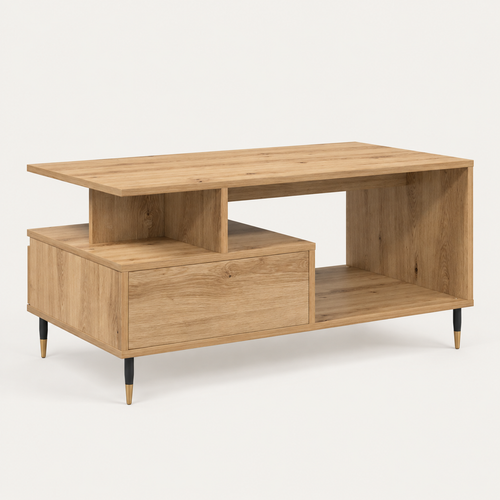
- The Sonoma table. Light oak finish, material not specified.
- The solid pine table. Natural wood shade, in solid pine.
A finish can match your floor very well, as the match comes from the colour and the graining. However, a decorative finish generally does not age like natural wood and cannot be sanded. Do not expect the patina of solid wood. To compare materials, read our guide solid wood or MDF coffee table.

Notre sélection
Our tables in walnut or brown shades

Should the coffee table match the parquet?
The floor is the largest area of wood in the room, and it serves as the first reference point. Looking for the same wood is rarely a good idea. A table almost identical to the parquet does not stand out, and a slight difference in shade looks like a mistake.
Keep three reference points in mind. Maintain a difference of two or three shades between the table and the floor, as with the sofa. Do not exceed three different woods in the same room. Keep a common undertone, i.e., the same warm, cool, or neutral trend.
The 4-step method
- Photograph your floor in daylight, without flash, where the table will go. Note whether it leans towards yellow, red, grey, or neutral.
- Locate it on the scale. Light for blonde wood or natural oak, medium for golden oak, dark for walnut, wenge, or anthracite tiles.
- Choose two or three shades apart. Take a dark table on a light floor, and a light table on a dark floor. A medium floor allows both, and the sofa will help you decide.
- Check the undertone. A yellow floor accepts a warm wood better than a greyed shade. Place the photo of the model next to your photo of the floor, on a properly adjusted screen.
According to your floor
- Light parquet. Anything is possible. The round walnut-effect provides the strongest contrast. The solid pine remains softer, provided that its shade differs significantly from the floor.
- Medium or golden parquet. An oak would be too close. Go for a more pronounced brown, such as the Artisan Oak table, or towards a significantly lighter oak, such as the Sonoma table.
- Dark parquet or floor. A walnut blends in. An oak-effect finish or the natural colour of our round tables stand out better.
- Grey tiles or concrete. The floor is cold, so a warm wood rebalances it. The walnut finish like natural wood suits very well.

Which coffee table with a grey, beige, or coloured sofa?
The sofa is the second reference point, and it is seen right next to the table. The goal remains the same, with a visible contrast. To choose the colour of the seat, read our guide which sofa colour to choose.
With a beige or cream sofa
This is the simplest duo. A walnut or a deep brown makes the table stand out in front of a light fabric. If the floor is already dark, stick to a medium wood so as not to weigh everything down. With the 3-seater beige chenille sofa or the 3-seater cream, try the round walnut-effect.
With a light grey sofa
Light grey is neutral and accepts both shades. Walnut warms it up significantly, and oak keeps a lighter Scandinavian spirit. Choose according to the light, with dark if it is generous and light otherwise.
With a dark grey or black sofa
A dark table adds a dark mass in the middle of the room. A light oak finish lightens the whole. This applies to the grey sofa-bed in corduroy and to the XXL sofa-bed in grey or black.
With a coloured sofa
In front of a green or brown, a light and discreet wood leaves room for the colour. Look at the 3-seater olive green, the green corner sofa or the 3-seater brown. The product page of the Artisan Oak table lists beige, cream, and green as matches. Avoid very red woods in front of a saturated green.

Notre sélection
Our tables in light shade, for a dark or coloured sofa

Líneas arquitectónicas y acabado roble claro
Finition chêne clair · espaces ouverts
$148.00
Voir le produit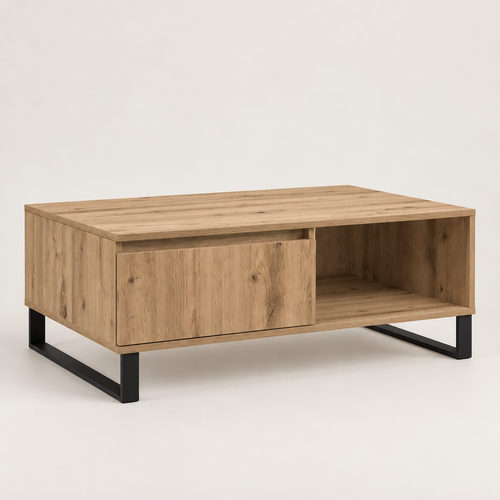
Diseño minimalista y líneas naturales
Effet chêne · 90 × 60 cm
$285.00
Voir le produit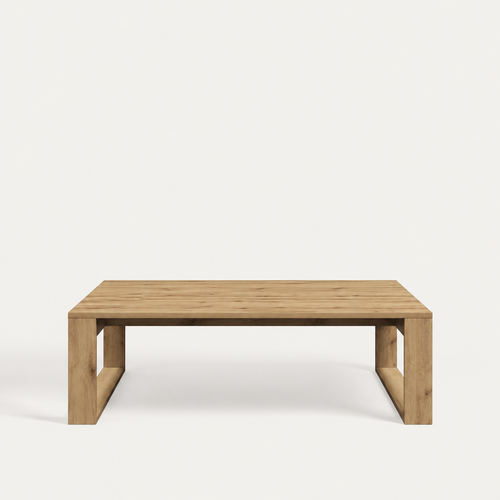
Volumen minimalista y acabado natural
Effet chêne · 100 × 100 cm
$206.00
Voir le produit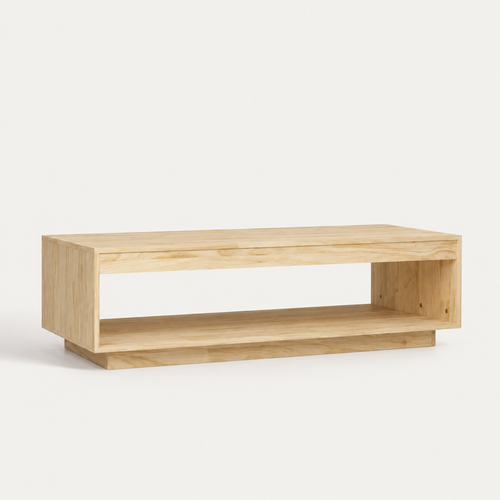
Almacenaje abierto y diseño natural
Pin massif · 110 × 50 cm
$273.00
Voir le produitWhich shade according to the light and the size of the room?
The same shade changes from one room to another. Before confirming your choice, look at where the light comes from, what time you use the living room and what its surface area is.
- Room facing north, little direct sunlight. The light is cooler and dark woods appear darker. Take a medium and warm shade, or a light oak if the room is small.
- Full south, large windows. The light is bright and light woods can appear pale. Walnut finds its place there and structures the space.
- Small living room. Dark masses weigh more. Take light, or dark only on a small format with visible legs.
- Large living room, high ceiling. Light woods can seem too light. Take a dark shade and a large format, such as a table of Ø 85 cm.
In the evening, the lighting takes over. Kelvin (K) indicates the colour of the light, and the lower the number, the warmer it is. A 2700 K light brings out the warm tones of walnut and golden oak. A cooler light makes them look duller.
So look at your samples by day and by night, under your real lamps. To match the lighting and the style, read our guide which lighting according to the décor style. Our article 2700 K or 3000 K helps you choose the temperature.
Before ordering, place a printed sheet or a piece of cardboard of the target shade on the floor, near the intended place. Look at it at three times, in the morning, late afternoon, and in the evening under your lamps. It is the simplest test.
The rest of the furniture: how many different woods?
The TV stand, the sideboard, the sofa legs, and the mirror frame also count. A common reference among decorators is not to exceed three wood shades. This reference helps the eye and does not constitute a strict rule.
Organize these three shades in a hierarchy. The base is the floor or the largest piece of furniture. The contrast, often the coffee table, creates depth. The accent, a small piece of furniture or a shelf, brings the final detail.
- Keep the same undertones. A golden oak and a warm walnut match better than a golden oak and a greyed wood. When the undertones differ, a rug or a neutral fabric makes the transition.
- Repeat one shade twice. A walnut table and a dark lamp base or frame show that the choice is intentional.
- Look at the legs. If your sofa has visible dark wood legs, repeat this shade on the table.
- Think about the furniture to come. To complete the living room, browse our collection of design furniture with your shade chart in mind.
Once the table is chosen, our guide how to decorate a coffee table helps you compose the top.
Walnut or oak according to your décor style?
Your style also guides the shade. Here are four simple combinations.
Mid-century and vintage
This style loves walnut and soft shapes. The round walnut-effect and its angled legs have a vintage look. The set of 2 round tables in brown colour also goes in this direction, with a brown sofa or cream.
Scandinavian
This style loves light wood and simple lines. The oak-effect table and the solid pine are described for a Scandinavian interior. They brighten the room in front of a light or grey sofa.
Japandi
This style combines natural tones and soft shapes. The set of 2 round wooden coffee tables fits in well, as does solid pine against a cream sofa.
Contemporary
This style prefers simple shapes. The Sonoma in light oak or the low, single-block rectangular table with a wood effect are good choices. Pair them with a sofa with clean lines.

Three practical examples
A 28 m² living room with light oak flooring and a cream sofa
The walls are white and the large windows face south. Everything is light, and the living room lacks a focal point.
Our choice: a round walnut-effect table measuring Ø 85 cm, three shades darker than the flooring, in front of the cream sofa. Add a small dark detail to a frame or lamp base to repeat the shade.

An 18 m² living room with dark flooring, facing north
Natural light is scarce, the floor absorbs a lot of it, and the XXL sofa bed is grey. Walnut would disappear.
Our choice: a oak-effect table measuring 90 × 60 cm and 35 cm high, contrasting with the floor. In the evening, keep the lighting at 2700 K so the finish remains warm.
A 22 m² living room with medium oak flooring and an olive green sofa
The olive green sofa catches the eye. The table should complement it without blending into the flooring.
Our choice: an Artisan Oak table, in a dark brown oak effect, measuring 90 × 49 cm, darker than the floor. Do not add any other wood shade, and keep the TV stand in the same tone as the flooring.
Mistakes to avoid
- Trying to match the wood of the flooring. An almost identical shade looks like a mistake. Aim for a difference of two or three shades.
- Choosing based on the screen alone. A shade varies depending on the screen and the room's lighting. Test it with a photo or a piece of cardboard placed on the floor.
- Choosing dark in a small, dark room. A large mass of walnut makes the room feel heavier, except in a small format and on visible legs.
- Using too many different woods. Beyond three shades, the eye can no longer find a hierarchy.
- Forgetting the undertone. Grey wood next to golden flooring clashes, even with the right difference in shade.
- Confusing shade with wood species. Walnut effect and light oak effect describe a finish. Check the material on the product page if that matters to you.
Your questions
Walnut or oak coffee table: which should you choose?
Choose according to the flooring and the sofa. A walnut shade works well with light flooring and a beige or cream sofa. A light oak shade works better with a dark sofa, dark flooring, or a small, poorly lit room.
Should the coffee table match the flooring?
No, it is better to have a noticeable difference of two or three shades, as an almost identical shade often looks like a mistake. However, keep the same undertone, warm or neutral, so the two woods complement each other.
What color coffee table with a grey sofa?
With light grey, walnut adds warmth and oak maintains a Scandinavian feel. With dark grey, choose light oak to avoid a dark mass in the center of the room. The room's lighting will help you decide.
What coffee table with a beige sofa?
Choose a dark shade such as walnut or a deep brown, which makes the table stand out against the light fabric. Avoid the exact same shade as the sofa, as the overall look would appear flat. If the flooring is already dark, stick to a medium wood.
Light or dark wood in a small living room?
Light wood remains the simplest choice, as it feels less visually heavy in a small room. A dark table is still possible if it is small and its legs allow the floor to be seen. Also consider the available natural light.
Can you mix walnut and oak in the same room?
Yes, provided you maintain a hierarchy and a common undertone. Limit yourself to three wood shades, with the flooring as the base, a contrasting shade such as the table, and a subtle accent. A neutral rug or fabric makes the transition easier.
Are your walnut and oak tables made of solid wood?
They are not presented as such. Our product pages mention walnut effect, walnut finish, oak effect, or light oak finish, meaning shades. Several tables specify particleboard, MDF, or engineered wood. In this guide, only the pine table is presented as solid wood.
Find the right shade for your living room
Compare our walnut effect, oak effect, light oak, and natural wood finishes with your flooring and sofa right before your eyes.
Free delivery · 30-day returns · Secure payment
